
The Cornerstone to Our Success
When choosing elevator hollow guide rails, two common types often come up: flat-edged hollow guide rails and flanged hollow guide rails. For many buyers, the difference is not obvious at first glance. Yet, the choice can affect installation, performance, maintenance, and overall cost. This article breaks down the key differences in a simple, beginner-friendly way while still maintaining technical accuracy.
To understand the difference, start with the shape.
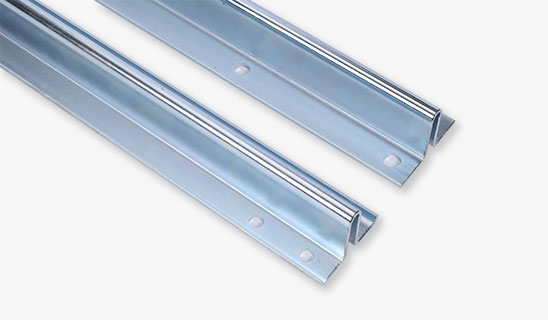
Flat-edged hollow guide rails have a simple profile with a straight edge and a hollow internal structure. They usually look like a rectangular tube with a flat outer surface. The design is straightforward and space-efficient.
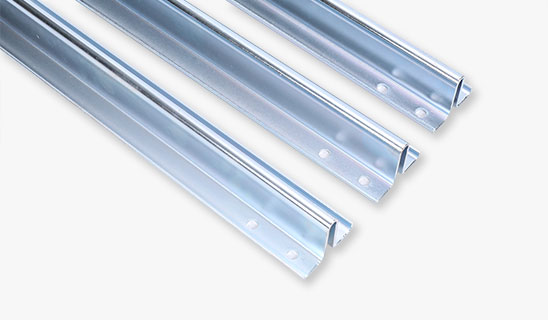
Flanged hollow guide rails, on the other hand, include additional flange structures on the sides. These flanges act like “wings” that extend outward, creating a wider base. In many cases, flanged guide rails resemble a hollow profile with extra support ribs or extended edges.
Key visual differences:
Flat-edged rails: compact, flat outer edge, easier to fit into narrow shafts.
Flanged rails: wider profile, additional support structure, often used where extra rigidity is needed.
These shapes affect how the rails are installed and how they perform under load.
Strength and stability are the most important factors in elevator guide rails. While both types are made from high-strength steel and designed to meet elevator safety standards, their structural behavior differs.
Because of the simpler profile, flat-edged rails can be lighter and easier to manufacture. They perform well under normal elevator operating conditions and are commonly used in standard passenger elevators.
However, their flat profile provides less resistance to bending and twisting forces compared to flanged designs. This means that in applications with higher loads or longer spans, flat-edged rails may show slightly more deflection.
The added flange provides extra stiffness and stability. The flange acts like a built-in support structure, increasing resistance to bending and torsion. This makes flanged hollow guide rails more suitable for heavy-duty applications or elevators with higher operational demands.
Summary of performance:
Flat-edged rails: good stability for normal loads; lighter and more space-efficient.
Flanged rails: higher rigidity and better resistance to bending; ideal for heavier loads and high-rise systems.
Installation difficulty is a practical concern for elevator contractors and maintenance teams. Here’s how the two types compare.
Flat-edged guide rails are generally easier to handle due to their simpler profile and lighter weight. They fit well in narrow shafts and require fewer special brackets. For many elevator installations, the rail alignment process is straightforward, and adjustment work is manageable.
However, the flat profile can be more sensitive to alignment accuracy. If the rail is not perfectly installed, the elevator car may experience more vibration or noise during operation.
Flanged guide rails are heavier and may require more effort during handling and installation. The wider profile can also demand more space and careful planning during installation.
The advantage is that the flange provides a more stable mounting surface, which can reduce alignment sensitivity. In other words, once installed correctly, flanged rails can offer better long-term stability with less risk of misalignment.
Installation comparison:
Flat-edged rails: easier to carry and fit in tight spaces; alignment needs careful attention.
Flanged rails: more demanding to install; better stability and long-term alignment performance.
Choosing the right guide rail depends on the elevator type and operating conditions. Below are common scenarios where one type may be preferred over the other.
For standard passenger elevators in low to mid-rise buildings, flat-edged hollow guide rails are often sufficient. They are cost-effective, space-saving, and meet the performance needs of typical elevator loads.
In high-rise buildings or heavy-duty elevator systems (such as freight elevators or industrial lifts), flanged hollow guide rails are frequently the better choice. Their increased rigidity helps maintain smooth operation under heavier loads and higher travel distances.
If shaft space is limited, flat-edged rails may be the preferred option due to their compact design. If there is enough space and the project demands higher stability, flanged rails become more attractive.
Practical selection guide:
1. Choose flat-edged rails for standard passenger use and compact shafts.
2. Choose flanged rails for heavy loads, high-rise elevators, or long travel distances.
Cost and maintenance are crucial for long-term elevator operation. A lower initial price does not always mean lower total cost.
Flat-edged rails typically have lower manufacturing costs because of their simpler structure. They can also reduce transportation and handling costs due to their lighter weight.
Maintenance is generally straightforward, but because they may be slightly more sensitive to alignment, periodic inspection and adjustment may be needed in high-usage environments.
Flanged rails often have higher initial costs due to more complex production and higher material usage. They are heavier, which can increase transportation and installation costs.
However, the increased stability often results in fewer long-term alignment issues and reduced wear on guide shoes and rollers. This can translate to lower maintenance needs over time.
Cost comparison summary:
Flat-edged rails: lower initial cost, easier to transport; may require more frequent alignment checks.
Flanged rails: higher initial cost; potentially lower maintenance and longer service life in heavy-use applications.
For most standard elevator projects, flat-edged hollow guide rails offer a cost-effective and space-saving solution. They are suitable for typical passenger elevators and standard load conditions.
If your elevator system involves heavy loads, high-rise buildings, or longer travel distances, flanged hollow guide rails provide better stability and durability, making them a safer long-term investment.
In the end, the best choice depends on your project requirements, shaft space, load conditions, and long-term maintenance goals. Consulting with an experienced elevator supplier or engineer can help ensure the correct guide rail selection.