The Cornerstone to Our Success
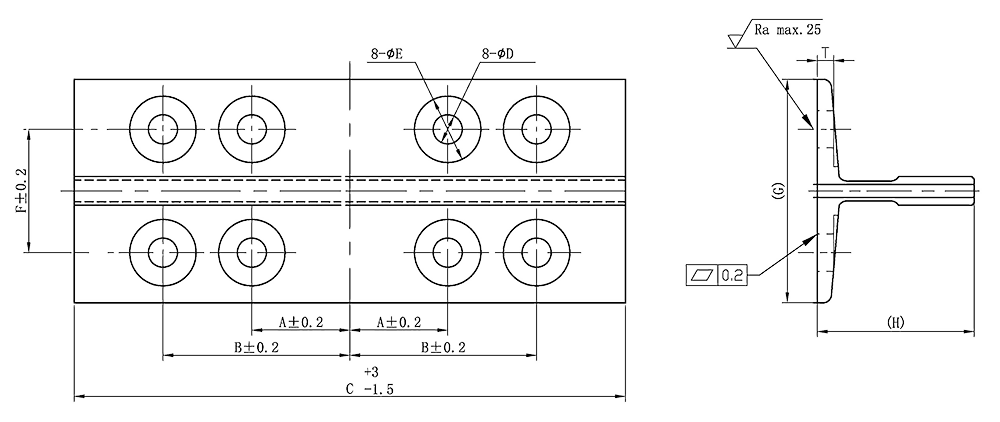
| Model | A | B | C | D | E | F | G | H | T |
| T89 | 38.1 | 114.3 | 305 | 13 | 26 | 57.2 | 89 | 61 | 7 |
| T89-1 | 38.1 | 114.3 | 305 | 13 | 26 | 57.2 | 89 | 61 | 7 |
| T127-1 | 38.1 | 114.3 | 305 | 17 | 33 | 79.4 | 127 | 88 | 7 |
| T127-2 | 38.1 | 114.3 | 305 | 17 | 33 | 79.4 | 127 | 88 | 7 |
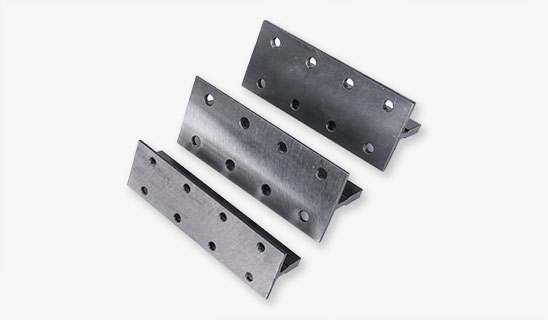
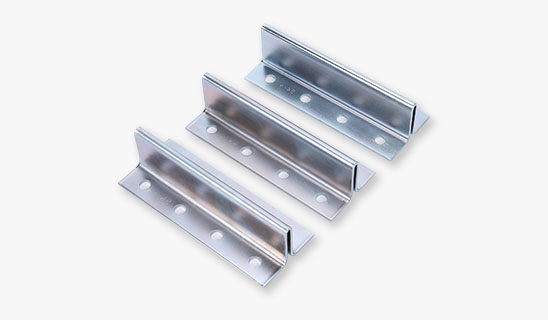
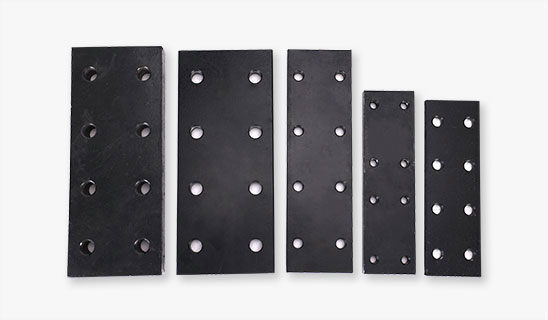
Guide rail fish plates are critical connecting components used to join and align guide rail sections in elevator systems and other rail-based installations. Designed to ensure accurate rail positioning and long-term structural stability, these plates provide a secure and reliable connection at rail joints, minimizing misalignment and vibration during operation.
Products are packed in secure export-grade packaging to prevent damage during handling and transportation. Flexible delivery options are available to support both standard and custom orders.
Guide rail fish plates are designed to ensure continuous and stable load transmission across guide rail joints, which are often critical points in a rail system. From a mechanical perspective, fish plates primarily transfer axial forces, shear loads, and bending moments between adjacent rail sections. When properly installed, the clamping force generated by the fastening bolts creates sufficient friction at the rail–plate interface, allowing loads to be distributed evenly across the joint rather than being concentrated at a single contact point.
The load transfer mechanism relies on a combination of frictional resistance and bearing action at the bolt holes. Under normal operating conditions, friction between the fish plate and the guide rail surfaces carries most of the applied loads, maintaining alignment and minimizing relative movement. As load levels increase, bearing stresses around the bolt holes and direct shear resistance of the bolts become more significant, ensuring joint stability under dynamic or impact loads. The geometry and thickness of the fish plate are therefore critical design parameters, as they directly influence bending stiffness and fatigue resistance. By providing a controlled and reliable load path, guide rail fish plates play a key role in preserving the structural integrity, alignment accuracy, and long-term reliability of guide rail systems.
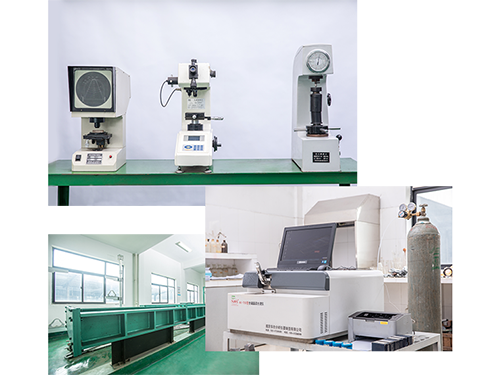
According to international standards: ISO7465:2007; ISO630: 2021. According to international standards, conduct comprehensive testing of raw materials based on the material certification provided by suppliers to ensure that the quality of each batch of raw materials meets the requirements.
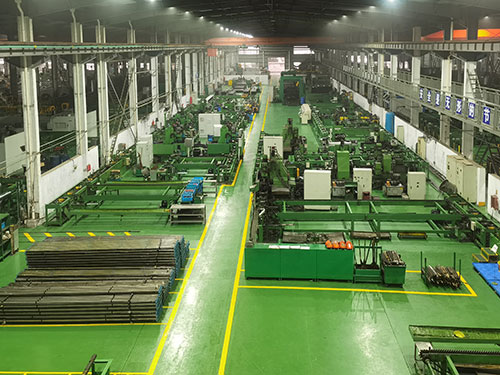
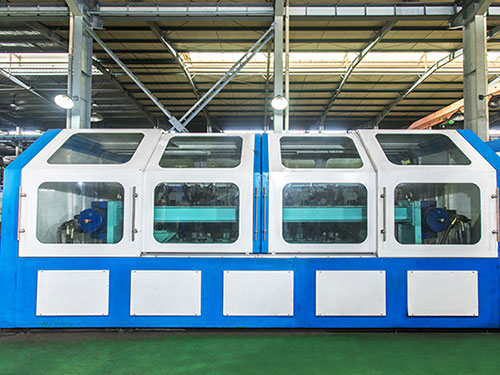
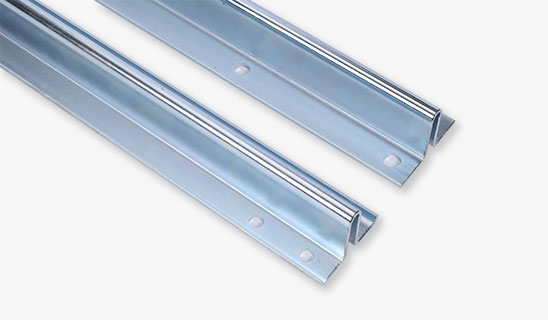
Configure two automated guide rail production lines. The equipment must ensure that the produced items comply with or exceed customer requirements while maintaining the stability of straightness, distortion, and surface roughness
Given the stringent requirements for straightness and twist in BE grade guideways, specialized automatic straightening and twist correction equipment, along with advanced detection systems, have been implemented. The straightness is maintained within 0.5 mm, while the twist is controlled to within 30' per meter
The service concept of "customer first" asserts that, regardless of where our services are delivered—be it within the company, at the client's workplace, on the construction site, or during transportation—our primary objective remains to satisfy the client